
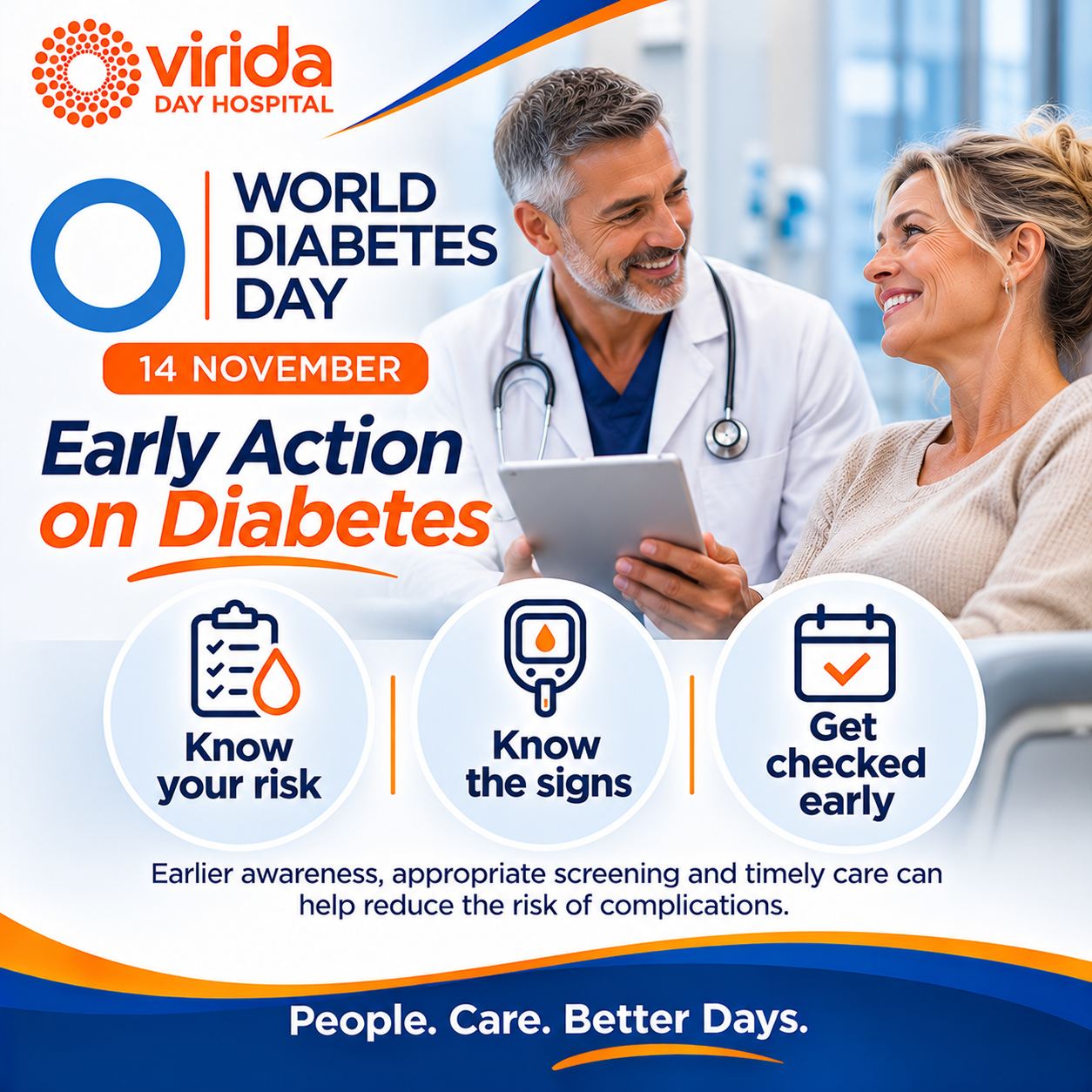
World Diabetes Day is observed every year on 14 November, bringing global attention to diabetes awareness, prevention, diagnosis and care.
For 2026, the focus is Early Action on Diabetes.
The message is simple but important: the earlier people understand their risk, recognise possible warning signs and access appropriate assessment and care, the greater the opportunity to support long-term health and reduce the risk of complications.
Diabetes can affect many parts of the body over time, including the eyes, kidneys, nerves, heart and blood vessels. In some people, the condition may develop gradually and remain unnoticed for a long period.
That is why early action matters.
What does “early action” mean?
Early action does not mean self-diagnosing or reacting to every small symptom.
It means being aware of your personal risk, attending recommended health checks and speaking to an appropriate healthcare professional when something does not feel right.
Early action may include:
- understanding your individual risk factors
- recognising possible symptoms of diabetes
- attending recommended screening or blood tests
- following up on abnormal results
- starting treatment when clinically indicated
- taking prescribed medication as directed
- maintaining regular medical follow-up
- addressing lifestyle factors where appropriate
The aim is to identify problems earlier and ensure that patients receive the support and care they need.
Knowing your risk
Some people have a higher risk of developing type 2 diabetes than others.
Risk factors can include family history, age, excess body weight, reduced physical activity, previous gestational diabetes and certain metabolic or cardiovascular conditions.
Having one or more risk factors does not automatically mean that a person has diabetes.
It does, however, make appropriate screening and regular healthcare follow-up more important.
If you are unsure about your personal risk, discuss it with your doctor or another appropriate healthcare professional.
Recognising possible warning signs
Diabetes does not always produce obvious symptoms, particularly in its earlier stages.
When symptoms do occur, they may include:
- increased thirst
- frequent urination
- unexplained tiredness
- blurred vision
- slow-healing wounds
- recurrent infections
- unexplained weight changes
- tingling or numbness in the hands or feet
These symptoms can also occur for other reasons, so they should not be used to diagnose diabetes on their own.
If you have concerns, appropriate medical assessment is important.
Why screening matters
Screening can help identify abnormal blood glucose levels before serious complications develop.
Depending on a person’s age, medical history, risk factors and previous results, a healthcare professional may recommend blood glucose testing or other investigations.
Earlier identification allows patients and their healthcare teams to make informed decisions about monitoring, treatment and lifestyle support.
Diabetes and long-term health
Diabetes affects more than blood sugar.
Over time, persistently elevated blood glucose can damage blood vessels and nerves throughout the body.
This may contribute to complications affecting:
- cardiovascular health
- kidney function
- nerve function
- eye health and vision
- wound healing
- circulation
Good diabetes care therefore often involves several healthcare professionals working together over time.
The goal is not only to manage blood glucose, but also to monitor and protect overall health.
The importance of follow-up care
Once diabetes has been diagnosed, regular follow-up becomes an important part of ongoing care.
Depending on the individual, this may include:
- blood glucose monitoring
- blood pressure checks
- cholesterol monitoring
- kidney function testing
- eye examinations
- medication review
- foot care
- nutrition and lifestyle guidance
Every patient’s care plan is different.
Following the advice of your treating healthcare team is more important than comparing your treatment plan with someone else’s.
Healthcare works best when patients are informed
Patient education is an important part of good healthcare.
When people understand why screening, medication, follow-up appointments and monitoring matter, they are better equipped to participate actively in their own care.
Questions are encouraged.
If you are unsure why a test has been recommended, how to take a medication or when you should return for follow-up, ask your healthcare professional.
Clear information supports safer, more confident healthcare decisions.
Early action can make a difference
World Diabetes Day is a reminder that diabetes care is not only about responding once complications have developed.
It is also about acting earlier.
Knowing your risk.
Attending appropriate screening.
Recognising concerning symptoms.
Following medical advice.
Keeping up with recommended care.
These steps may seem simple, but together they can make an important difference to long-term health.
At Virida Day Hospital, we support patient-centred healthcare built around clear communication, informed care and appropriate clinical follow-up.
People. Care. Better Days.
Patient education note: This article is intended for general information and patient education only. It does not replace individual medical advice, diagnosis or treatment. If you are concerned about diabetes, blood glucose or your personal risk, please consult an appropriate healthcare professional.